A Supper Plan for Guests Arriving at Different Times
A supper plan for guests arriving at different times keeps food appealing and manageable by separating make-ahead components from dishes assembled to order.
How do you serve a good supper when guests arrive at different times? Build a supper plan for guests arriving at different times around components that can wait, then finish only the parts that need attention as people sit down. A pot of beans, a tray of roasted vegetables, bread, and a fresh topping can form a meal without making every dish depend on one exact arrival time.
The common snag is treating supper as a single performance: every plate should be ready at once. Instead, plan for a comfortable first serving and a clear way to refresh or assemble another. That shift helps you spend time with guests rather than guarding a pan or reheating an entire meal.
Start by identifying what can wait
Before choosing dishes, sort the meal by how each part behaves after cooking. Some foods hold their appeal at room temperature, some stay pleasant in a covered pot, and others lose texture quickly and are best finished just before serving.
- Can wait: bread, olives, a sturdy salad dressing, cooked beans, and many roasted vegetables.
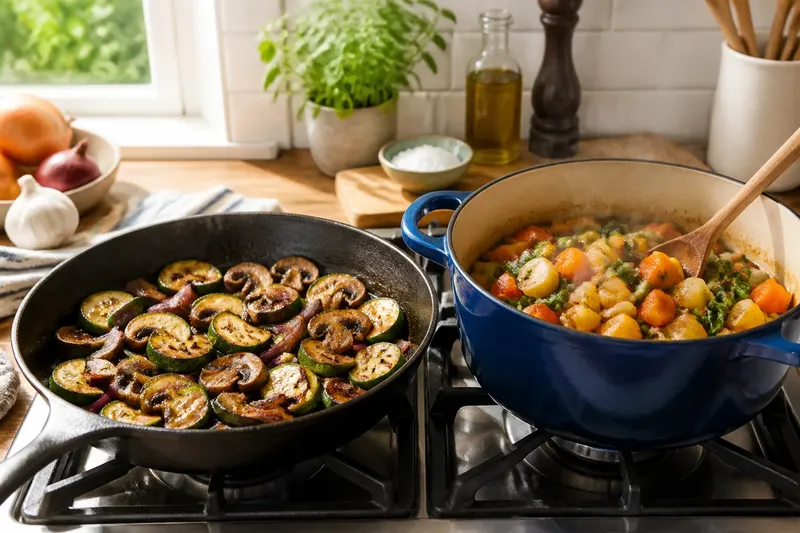
- Can hold warm: a soup, stew, or braise kept covered over gentle heat, with occasional stirring as needed.
- Should be finished late: crisp greens, toasted bread, a delicate sauce, or a quickly cooked main component.
Choose a menu with only one or two late-finish elements. If every side needs a hot pan, last-minute tossing, or crisping, staggered arrivals will turn the kitchen into a queue. A sturdy base and a bright, fresh garnish usually provide enough contrast without adding more timed work.
When does a staggered supper plan go wrong?
Why does the first serving feel like a separate meal?
This often happens when the food that is ready early has no connection to the later meal. Put out a small welcome snack that belongs with the supper’s flavors, such as sliced cucumber with a yogurt dip before a bean-and-roasted-vegetable meal. Keep it modest so guests can nibble without filling up before the main dish.
Why does the food turn dry or tired while waiting?
Uncovered food loses moisture, while repeated reheating can make some dishes dull or uneven. Hold moist dishes covered and finish them with a fresh element later, such as herbs, lemon, or a spoonful of dressing. Keep crisp toppings separate until the moment they are served.
Why does the host get trapped at the stove?
The menu may contain too many tasks that begin only when guests arrive. Replace one hot side with a prepared dish that tastes good at room temperature, and choose a main that can be portioned without precise timing. Leave only a simple finishing action for the final serving.
What if someone arrives much later than expected?
Do not keep the whole meal hot indefinitely just to preserve a single serving. Set aside an appropriate portion before serving, then cool and store it safely if dinner will be delayed; reheat it when the guest is ready. For food handling and holding decisions, follow the dish’s storage guidance and applicable food-safety advice.
Build the menu in layers
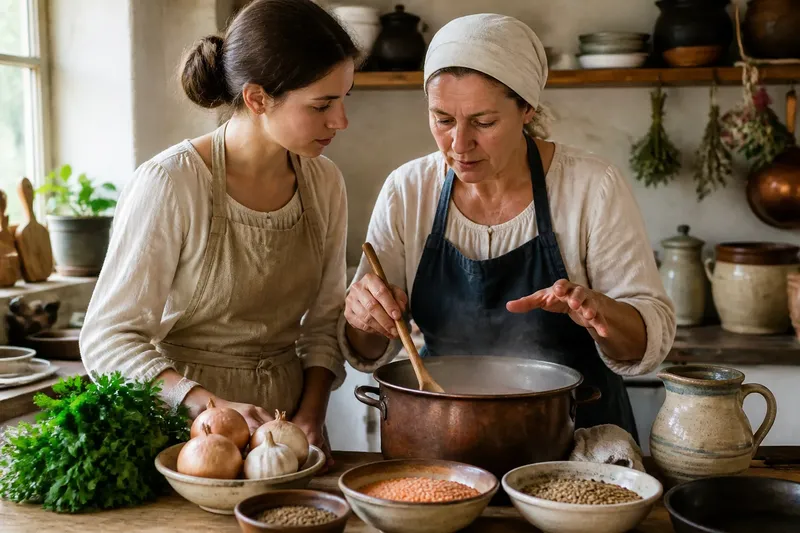
Think of the meal as a base, a fresh contrast, and an optional finishing touch. For example, a pot of lentils can be the base; chopped parsley and lemon can bring freshness; toasted seeds or crumbled cheese can add texture at the table. Guests arriving in separate waves can receive the same combination without requiring the lentils to be cooked again.
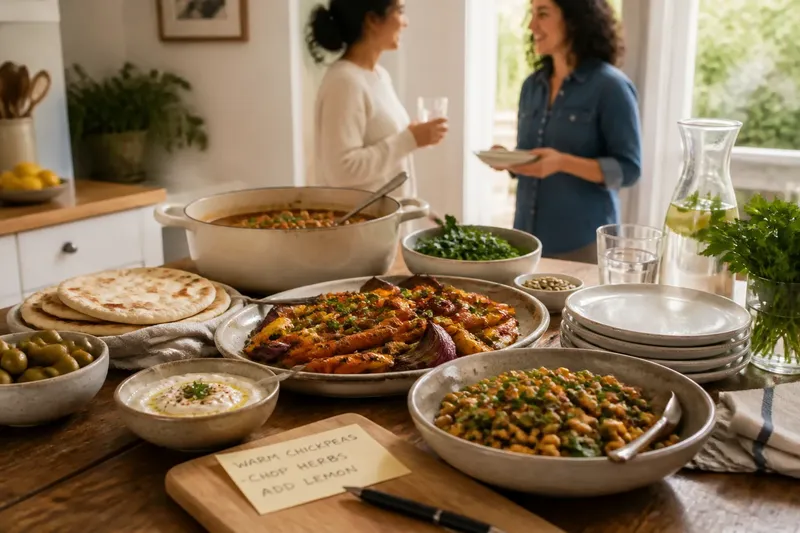
Say you expect one guest early and two more later, but the exact timing is uncertain. Imagine making a tray of roasted carrots and a pot of chickpeas ahead, then setting out flatbread and a bowl of tahini-lemon sauce. Serve the first guest a modest portion, keep the chickpeas covered, and add fresh herbs to the later servings; the observable result is a meal that feels newly assembled without repeating the main cooking.
Use a serving arrangement that supports this sequence. Put durable components in bowls or on a platter, keep sauces and crunchy toppings separate, and leave a clean plate or board ready for the next round. This is more useful than arranging every dish at once, when early servings can make the table look picked over.
Choose a holding method that suits each dish
A covered pot is a natural home for soup, beans, or a saucy braise. Keep the heat gentle enough to avoid scorching, stir when appropriate, and add a splash of water or broth if the dish thickens more than you want. Do not assume a delicate cooked food can simply sit warm for an extended period; use safe holding and storage guidance for the ingredients and conditions involved.
For roasted vegetables, a broad platter can be better than stacking them in a deep bowl, where steam softens browned edges. If they cool, serve them at room temperature with a fresh dressing, or warm only the portion that needs it. For salad, store washed leaves dry and dress each serving separately so later guests get crisp greens.
Some foods are better held as ingredients than as a finished dish. Keep sliced bread unassembled until serving, and store a topping that should stay crisp in a separate container. A dish that can be completed at the table gives you flexibility without requiring an extra round of cooking.
Make the second serving easy to assemble
Before the first guest arrives, decide what the later serving will need. Leave out the correct platter, serving spoon, and any finishing ingredients, while putting perishable items away until they are needed. A brief note on the counter—“warm chickpeas, chop herbs, add lemon”—can prevent a flurry of decisions when conversation is underway.
Keep the sequence short and specific. Warm the base if needed, add a fresh element, then bring out the sauce or topping. If the dish depends on a quick-cooking item, cook that item for each wave rather than trying to hold it through a long wait.
What is not worth the effort is making a separate full menu for every arrival. It adds dishes and decisions without making the meal feel more welcoming. A shared base with small, fresh finishing touches is usually enough to make each serving feel considered.
Keep drinks and snacks from complicating dinner
A simple welcome drink and one small snack can take pressure off the first arrival. Choose something that needs little attention, such as sparkling water with citrus or a bowl of spiced nuts, and avoid putting out so much that guests expect a second meal before supper. If the main dish is still finishing, tell early guests plainly that dinner will come in stages.
Keep the snack separate from the components you are saving for dinner. That avoids accidental grazing on a garnish or bread you need for the later serving, and it gives you a clear point at which to bring out the main meal.
How should you handle common timing questions?
Should everyone wait until the last guest arrives?
Usually not, unless the meal itself depends on being served together. Offer an early guest a small starter or a first portion, and keep a separate serving for the person who is late.
What dishes work best for arrivals in waves?
Soups, stews, braises, beans, grain bowls, and room-temperature vegetable platters are adaptable choices. Pair one with a fresh topping or a quickly assembled side so later portions still have contrast.
How can I keep salad crisp for late guests?
Keep the leaves dry and undressed, and store dressing in a separate jar. Toss only the amount needed for each serving, adding delicate herbs or crunchy ingredients at the same time.
Should I reheat a whole dish for every new arrival?
No; reheat only the portion you expect to serve when that is practical and safe for the dish. Leave the remaining food stored or held according to its needs rather than repeatedly warming and cooling the entire batch.
Write a short plan before the doorbell rings
A useful supper plan for guests arriving at different times can fit on a scrap of paper: what is ready, what needs warming, what stays separate, and what finishes each serving. Name the one task you will do when the next guest arrives, then make everything else either ready to serve or safely put away.
That small plan is especially helpful when the timing changes. You can welcome someone, offer the prepared snack, and return to one clear finishing action instead of reconsidering the whole menu. Keep a clean container available for leftovers as well, so the final serving and kitchen reset do not become another round of improvisation.