Why Pasta Water Helps a Sauce Cling
Why pasta water helps a sauce cling: learn how starch and tossing bring oil and water together, then add just enough cooking water for a glossy coating.
Why does pasta water help a sauce cling instead of leaving oil pooled at the bottom of the bowl? The answer is partly starch and partly movement: a little cloudy cooking water helps oil and water form a more even coating when you toss them with hot pasta.
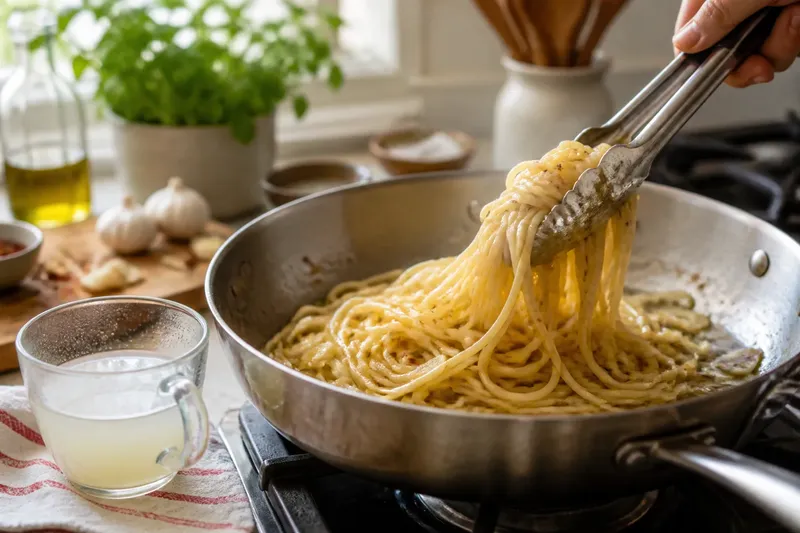
Consider an invented situation. You have cooked spaghetti and sliced garlic gently in olive oil, but the finished strands look slick rather than sauced. Instead of pouring in a ladleful of water, you reserve a small cup before draining, then work a modest splash into the pan while tossing the pasta. The sauce turns cloudy and gathers around the strands; if it loosens too much, you keep tossing over low heat until it looks cohesive.
That simple adjustment shows the useful principle: pasta water is an ingredient to add gradually, not a magic fix. Its starch can help the sauce hold together, while tossing spreads the mixture across the noodles.
Starch gives an oil-based sauce something to hold
As pasta cooks, some starch moves from its surface into the surrounding water. The amount varies with the pasta, the water, and the cooking process, so a jar of reserved water is not identical every time. Cloudiness can suggest that starch is present, but it is not a precise measure of how much the sauce will need.
Oil and water naturally separate when left alone. In an oil-based sauce, the starch in pasta water helps disperse small droplets of oil through the liquid, creating a temporarily more unified mixture. The result is a sauce that looks lightly creamy or glossy, though it contains no cream.
This does not mean the starch thickens a sauce by itself in the same way flour might thicken a gravy. Its practical role is to help the watery and oily parts combine while the mixture is being worked. Too much liquid can still make the pasta wet and dilute the flavor.
Tossing spreads the sauce over the pasta
Movement matters because the sauce needs to meet the pasta repeatedly. Tossing or stirring brings oil, starchy water, and the pasta’s surface into contact, helping the mixture distribute rather than settle in the pan. Heat also helps the ingredients stay fluid as they combine.
For long pasta, use tongs to lift and turn the strands in the pan. For short shapes, a broad spoon or spatula can fold them through the sauce without crushing them. The goal is steady mixing, not forceful splashing; if the pan is crowded, work carefully so the pasta can move.
Think of the process as adjusting texture in small increments. Add water, toss, and look at the coating. A unified sauce should cling lightly to the pasta, with no obvious puddle of water or separate slick of oil.
Add reserved water a little at a time
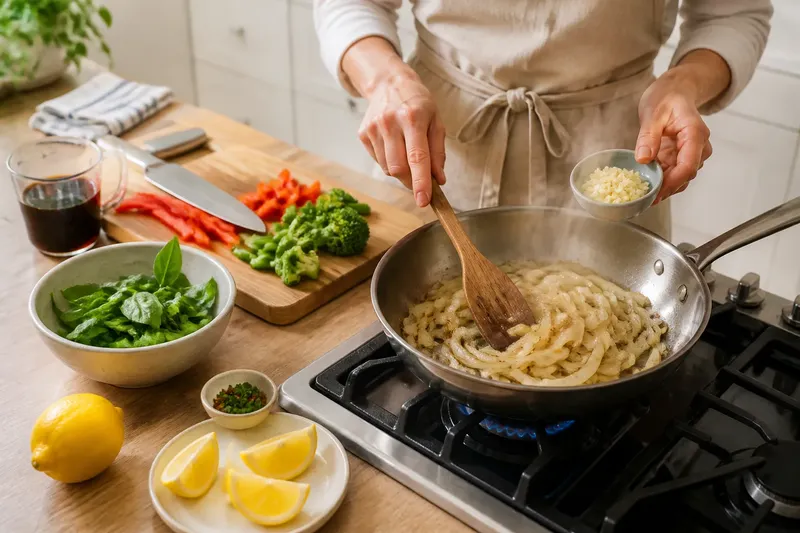
Before draining, scoop some cooking water into a heatproof mug or small bowl. Keep it nearby while you finish the sauce. If you drain the pasta in a colander, do not rinse it; rinsing removes surface starch and cools the pasta, which can make it harder for the sauce to coat.
Put the drained pasta into the pan with the oil-based sauce, then toss it over low heat. Add a small splash of reserved water and keep tossing until the sauce looks more cohesive. If the strands still seem dry, add another splash. Stop as soon as the coating looks right; a glossy finish does not require the pasta to swim in liquid.
If the sauce becomes thin, keep the pasta moving over gentle heat so some water can evaporate and the mixture can gather again. Avoid trying to correct it with a large amount of extra oil: that may make the coating greasy rather than integrated. If the pan is already off the heat, return it briefly to a low burner if appropriate for the recipe, then toss and reassess.
Salted pasta water also carries seasoning. Taste the sauce before adding more salt, especially if you have used salty cheese, olives, anchovies, or other seasoned ingredients. The liquid’s saltiness can vary, so use taste rather than an assumed amount to guide the final seasoning.
Keep the adjustment restrained
A common misstep is adding water before the pasta and sauce are moving together. The liquid may sit beneath the oil rather than helping coat the strands. Combine the pasta and oil first, then add water while tossing so the ingredients meet as you adjust.
Another is pouring in all the reserved water at once. You cannot easily take it back, and the right amount depends on how much pasta is in the pan and how concentrated the sauce is. Reserve more than you expect to use, but treat it as a supply, not a target.
There is no need to chase an especially thick, restaurant-style coating for every dish. A simple oil-and-garlic pasta can be pleasant with a light sheen; repeated additions, vigorous mixing, or reducing the sauce until it becomes heavy may be more effort than the dish needs.
What should you look for as you finish the pasta?
How cloudy should pasta water be?
Cloudiness can indicate suspended starch, but it does not tell you an exact amount to add. Use the water as an adjustable cooking liquid and judge the sauce by how it coats the pasta.
Can you use pasta water after it has cooled?
Yes, reserved water can still be added after cooling, though it may cool the pan and sauce. Warm it gently before adding if convenient, and continue tossing over low heat so the pasta stays hot.
What if the sauce still looks oily?
Add a small splash of pasta water and toss more thoroughly before deciding whether to add anything else. If the pan is cool, gentle heat can help the mixture move together; avoid pouring in several additions without checking the texture.
Can pasta water help a sauce without cheese?
Yes. Starch and mixing can help an oil-based sauce coat pasta even when it contains no cheese. Cheese may contribute body and flavor, but it is not required for this technique.
Let the pasta’s texture make the call
The best moment to stop is when the sauce follows the pasta instead of separating beneath it. Lift a few strands with tongs: if they carry a light, even coating and the pan has no watery puddle, serve. If the pasta sits while you finish other tasks, the sauce may thicken as it cools, so a tiny splash of warm pasta water and a quick toss can refresh it.
Why pasta water helps a sauce cling comes down to a modest partnership: starch supports the mixture, and movement distributes it. Keep a little water within reach, add it in small splashes, and let the texture—not a fixed quantity—tell you when the sauce is ready.