A Wide Pan or a Deep Pot for Browning Vegetables?
Choose a wide pan or deep pot for browning vegetables by matching the cooking surface to your batch, moisture level, and desired tender or browned finish.
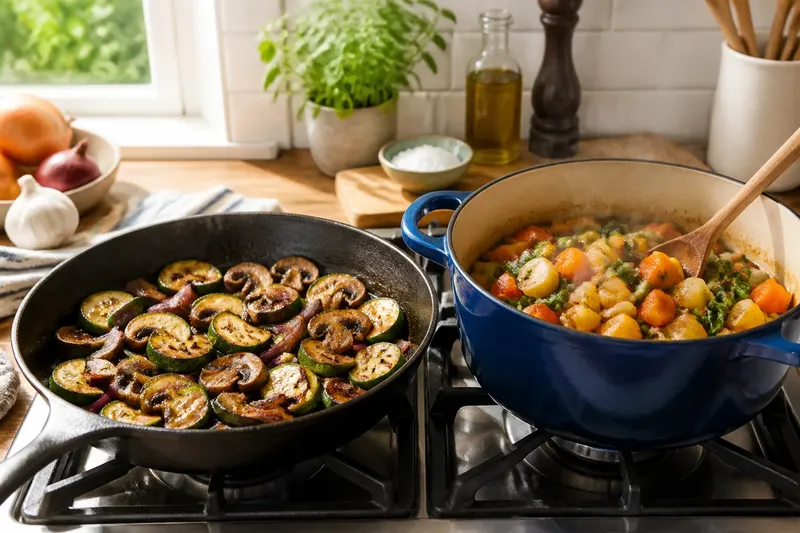
Should you reach for a wide pan or a deep pot to brown vegetables? For browning vegetables, start by asking how many pieces can sit against the hot cooking surface at once. A broad skillet or sauté pan gives them room to release moisture and develop color; a deep pot can hold more food but may crowd it into a steamy pile.
Neither shape is always right. Choose based on batch size, moisture, and whether you want distinct browned edges or a soft, cohesive result. These checks can help you decide before heating the cookware.
Count the pieces that can touch the surface
A wide pan spreads vegetables over a larger base, allowing more pieces to contact the hot surface at once. A deep pot may look spacious from above, but its narrower base can leave vegetables stacked in several layers. For browning, the usable base area matters more than the vessel’s total capacity.
Aim for a loose layer rather than filling the cookware to the rim. Pieces can touch, but avoid packing or piling them if you want color. In a crowded pan, released liquid has less room to evaporate, so vegetables are more likely to soften before their surfaces brown.
Say you have a bowl of sliced mushrooms to cook for toast, and your skillet cannot hold them loosely in one layer. Divide them into two batches and cook each separately. The smaller loads have more pan contact and room for steam to escape, so you can expect better browning; the trade-off is another round of cooking and attention between batches.
Use the cookware you own rather than seeking a particular shape. A wide cast-iron skillet, stainless-steel sauté pan, or broad enameled pan can provide a generous base. A Dutch oven can also work if its bottom is broad enough for the amount of vegetables you are cooking.
Choose a deep pot when softness matters more
A deep pot suits vegetables that will soften together, cook with liquid, or benefit from contained splatter. Its high sides also give you room to stir a substantial mixture without pieces spilling over the rim. For soup, stew, or a covered vegetable mixture, that capacity may matter more than a broad cooking surface.
A deep pot can also hold rising steam close to the food, especially when watery vegetables are piled high or covered. That helps create a tender result but makes dry, even browning harder. If color matters, leave the lid off and cook a manageable amount, or brown some vegetables in a wider pan before adding them to the pot.
Cut size matters as well. Thick chunks take longer to soften through than thin slices, and a packed pot can make turning pieces difficult. A wide pan gives you room to move individual pieces; a pot gives you room to stir a mixture. Choose the kind of movement that suits your cut and desired finish.
Let each vegetable’s moisture guide the batch
Mushrooms, zucchini, and eggplant can release noticeable moisture as they heat. A wide pan helps that moisture disperse, but it cannot make an overloaded batch behave like a loose one. If the surface becomes wet and the vegetables soften without browning, reduce the load for the next round or use a broader cooking surface.
Carrots, potatoes, and winter squash may release less visible liquid, but their cut faces still need room to contact the pan. Large pieces can brown outside while remaining firm in the center. If you want them tender throughout, a covered pot with a little liquid may suit the task better than a pan focused on surface color.
Frozen vegetables release moisture as they thaw. A wide, uncrowded pan can help the liquid evaporate; a deep pot is convenient if the vegetables are going directly into a saucy dish. The batch size and the vegetables’ condition still affect the result.
Match stirring to the finish you want
For browned edges, give vegetables time to sit against the hot surface before turning them. A wide pan makes it easier to spread, flip, or toss pieces without piling them up. Constant stirring interrupts contact, but leaving food untouched too long can lead to sticking or scorching. Check the underside and turn the pieces when they have taken on color.
A deep pot favors more frequent stirring when ingredients need to combine, soften, or become coated with liquid. Its high sides help contain a vigorous stir, but a narrower base can make it harder to keep each piece against the bottom. If a pot is your only option and browning matters, cook smaller loads and move the pieces deliberately rather than stirring the entire pile at once.
Use a utensil suited to the cookware. A wooden spoon or heat-safe silicone turner works well with coated surfaces; a thin-edged spatula can help lift vegetables and browned bits from uncoated metal. Follow the cookware maker’s instructions for heat and utensils.
Choose the vessel that fits the finish and cleanup
A broad pan is a direct choice for distinct golden edges, quick sautéing, or vegetables served as separate pieces. A deep pot suits a softer, more cohesive result, especially when the recipe calls for liquid, a lid, or a mixed batch. You can use both: brown a portion in the pan, then add it to the pot if the rest of the dish needs to simmer.
Consider the cooking surface as well as the shape. A heavy pan tends to retain heat when food is added, while a thin vessel may cool more noticeably under a large load. Nonstick cookware can make delicate pieces easier to release, but it may not suit every high-heat browning approach. Follow the maker’s guidance on heat and utensils.
What is not worth the effort is transferring vegetables between vessels just to match an idealized picture of the right cookware. If your pot has a broad base and the batch fits loosely, use it. If your pan is too small, cook in rounds rather than forcing the whole batch into a crowded layer.
Which cookware question should you ask first?
Can a deep pot brown vegetables?
Yes, if the bottom is broad enough and the vegetables fit in a loose layer. A narrow base or tall pile makes it harder for moisture to escape and pieces to brown evenly.
Should vegetables be in one layer?
For surface browning, aim for a loose layer with some exposed pan between pieces. If the batch is too large, cook it in rounds or accept a softer, more steamed result.
Is a skillet better than a Dutch oven?
A skillet often suits quick browning because its broad, open surface gives moisture room to escape. A Dutch oven is more useful for larger mixed dishes, gentle softening, or cooking that continues with liquid.
What should I do if vegetables release liquid?
Keep the lid off and let the liquid evaporate, or move part of the batch to a wider pan. Once the surface is no longer wet, the vegetables have a better chance to brown.
For browning vegetables, choose by the space each piece gets on the base, not by how much the cookware can hold above it. A wide pan is a good starting point for a loose batch and distinct color; a deep pot makes sense when tenderness, volume, or a liquid finish matters more. If you are unsure, start with a manageable portion and judge its texture and color before cooking the rest.